Difference Between Hydroponics and Aquaponics ?

Hydroponics vs Aquaponics
 

As the words hydroponics and aquaponics have a similar meaning, there is always a doubt whether there is any difference between the two or are they the same. In fact, there is some difference between hydroponics and aquaponics, which are techniques used to cultivate plants in the modern world. Aquaponics is a method that uses basic hydroponic techniques to grow plants. The basic difference between hydroponics and aquaponics is the type of water used in the system; i.e. aquaponics use fish raised water instead of the nutrient solutions used in hydroponic systems.

What is Hydroponics?

Hydroponics is a technique of growing plants in nutrient solutions that contain water and fertilizers with or without using an artificial medium such as sand, gravel, coir etc. Since hydroponically grown plants are not embedded in a soil medium, they absorb required nutrients from the provided nutrient solution given. Artificial medium provide mechanical support, aid moisture and retain nutrients.
There are six basic types of hydroponics systems depending on the nutrient supplying method. They are as follows:
• Wick system
• Water culture system
• Ebb and flow (flood and drain) system
• Drip systems (recovery/ non- recovery)
• Nutrient film technique (NFT)
• Aeroponic system
Except for NFT and the aeroponic system all the other systems use growing substrates such as coarse sand, sawdust, perlite, vermiculite, Rockwool, expanded clay pellets, coir (coconut fibers).
Difference Between  Hydroponics and Aquaponics
Nutrient film technique (NFT)
In wick system, nutrient solution is drawn into the growing medium from a reservoir with a wick. In water culture system, a platform made of Styrofoam holds the plant and floats on a nutrient solution containing reservoir. In the ebb and flow method, first plant holding tray/platform is temporarily flooded with the nutrient solution and then solution is drained off to the reservoir. This is performed using a submerged pump connected to a timer. In drip systems, nutrient solution is dripped onto the base of each plant with the help of a pump and a timer. In NFT, continuous flow of nutrient solution is supplied into the plant containing platform so that solution flows over the roots continuously. In aeroponics, roots are kept inside a moist containing chamber that provides mist of nutrient solution directly to root system.

What is Aquaponics?

Aquaponics also can be considered as a hydroponic system. However, in aquaponics fish raised water is used as the nutrient solution for the plants. In this method, water in aquaculture tanks (fish tanks)are pumped to plants containing reservoirs. These reservoirs contain bacteria that can convert ammonia and nitrate in the fish water to nitrate. Plants take up this nutrient rich water and filtered clean water is again returned to the fish tanks.
Fish types that are used for this type of system includes: aquarium fish (goldfish Guppies, koe' tetra, etc.), Tilapia (commonly used), trout crap Freshwater Prawns, etc.
Bacteria used to convert chemicals include; Nitrosomonassp. and Nitrobactersp.
Some of the crops that can be grown using this method involves the following: Vegetable crops such as lettuce, beans, spinach, cucumber, etc., herbs such as, basil, thyme, lemongrass, parsley, etc. Fruits such as strawberries, watermelon, tomatoes and most garden varieties of flowering plants.
Hydroponics vs Aquaponics
Filtered water from the hydroponics system drains into a catfish tank for re-circulation
Aquaponics can be considered as more sustainable ecosystem that facilitates symbiotic relationship between fish and plants. That is plants can take up water that is purified by bacteria for their growth while acting as natural filter to fish.

What is the difference between Hydroponics and Aquaponics?

• Both systems use nutrient containing solutions of water as the growing medium.
• In hydroponics, fertilizers and other nutrients should be added to water to prepare a nutrient solution. However, in aquaponics fish raised water is used as nutrient solution.
• Therefore, hydroponics is more expensive compared to aquaponics.
• In hydroponics, no bacteria is involved. In aquaponics, bacteria is used to convert the chemicals in fish water to nitrates.
• In hydroponics system, water cannot be recycled however in aquaponic system water can be recycled to fish tank to plants to again fish tanks.
Therefore, it can be concluded that Aquaponics is a method that has derived from hydroponics and it is an inexpensive and efficient method to obtain nutrient solution. Also, it is an eco- friendly method to grow plants and aquaculture.


                               THANKS FOR READ.


Like us on facebook

https://www.facebook.com/navjivanmehnagar

Difference Between Melanin and Melatonin ?

Melanin vs Melatonin

 
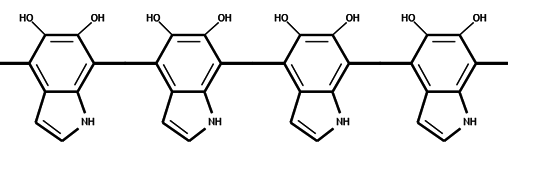
Melanin and melatonin are two chemically related substances, but with many different characteristic features. Their origin, function, chemical composition and location in the human body vary widely, and which will be discussed here in detail.

What is Melanin?

Melanin is one of the major pigments found in human skin, which determines the skin color. It is synthesized by melanocytes, which are located in the skin, eye, ear, hair, and CNS of the human body. In addition of providing color, melanin has some other functions, as well. The most important function is the protection of skin from solar UV radiation, which causes skin cancer  to humans. Melanin shields the cell’s nuclei, thus prevents DNA damage due to radiation. In addition, it is also involved in hearing.
Difference Between Melanin and Melatonin
Human melanin basically contains two polymers (a) eumelanin, which is dark brown/black and is produced in eumelanosomes, and (b) pheomelanin, which is red/yellow and is produced in pheomelanosomes. Usually, the final color of an individual’s skin depends on the type and amount of melanin produced and the shape, size, and, distribution of the melanosomes in the skin.
What is Melatonin?
Difference Between Melanin and Melatonin
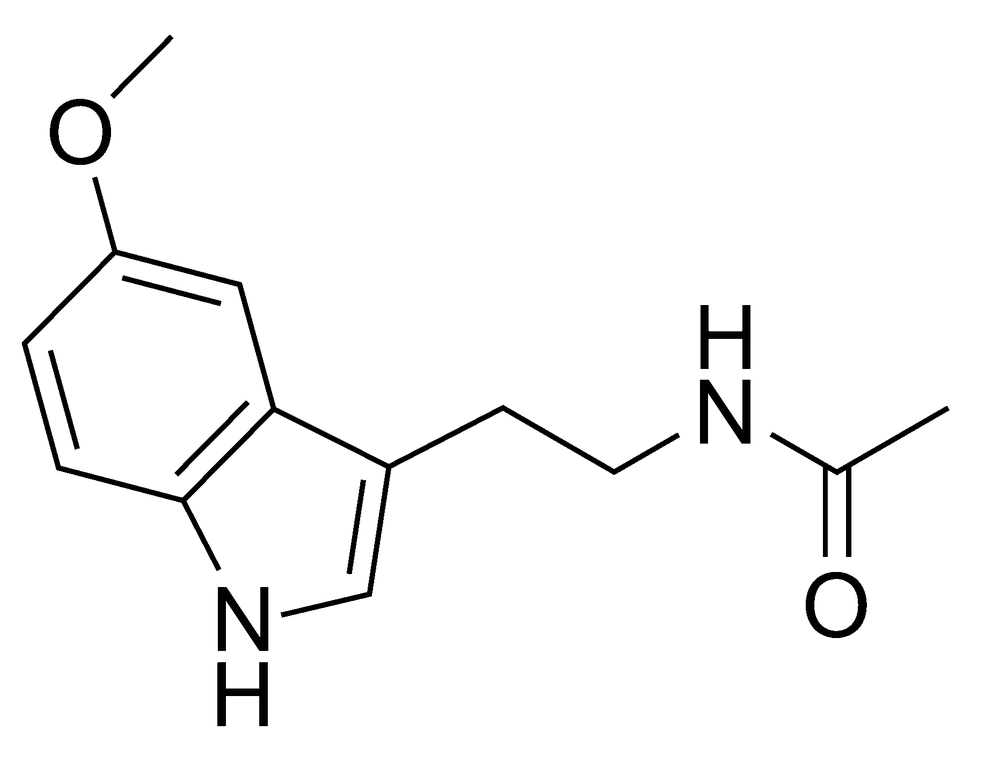
Melatonin is a neurotransmitter, which is mainly derived from the cells in the gastrointestinal tract, the retina, and the pineal gland. Melatonin is responsible for maintaining sleep wake cycles, biological rhythms, and the modulation and inhibition of melanin synthesis. In addition, melatonin can repair the cells, which have been damaged by stress and disease, and stop the secretion of MSH and ACTH hormones. Also being an antioxidant, melatonin can destroy microorganisms, and thus it is referred to as disease-fighting hormone.
Melatonin is one of the most complex molecules found in the brain liver intestine, blood, and muscles. Melatonin is synthesized from Tryptophan, and the synthesis and secretion of melatonin are stimulated by catecholamines.

What is the difference between Melanin and Melatonin?

• Melanin is a pigment produced by tyrosine, whereas melatonin is a neurotransmitter produced by tryptophan.
• The main functions of melatonin are the modulation of the synthesis of melanin, maintaining the sleep wake cycle and biological rhythms in the body, whereas that of melanin are providing skin color, photo-protection, and involving in hearing.
• Melanin is synthesized in melanosomes, which are found in melanocytes, while melatonin is synthesized in the cells of the gastrointestinal tract, retina, and pineal gland.
• Melanin can be found in skin, eye, ear, hair, and central nervous system, whereas melatonin can be found in brain, liver, intestines, blood and muscles.


                               THANKS FOR READ.


Like us on facebook

https://www.facebook.com/navjivanmehnagar

Difference Between Juice and Syrup ?

Juice vs Syrup


Juice and Syrup are two words that are used as interchangeable ones. Strictly speaking there is some difference between juice and syrup. Juice is in fact the liquid part of vegetables or fruits. In other words it can be said that the juice of a fruit is formed out of the pulp. The pulp when crushed gives rise to juice.
The word ‘juice’ is derived from the Latin word ‘jus’. Syrup on the other hand is a sweet sauce made by dissolving sugar in boiling water, often used for preserving fruit. One of the main differences between juice and syrup is that syrup makes use of sugar in its preparation whereas juice is natural pulp in liquid form.
Juice is constituted by sugars innate in the fruit whereas syrup is constituted by added sugars or sweeteners. Another important difference between juice and syrup is that juice is taken directly from the fruit whereas syrup is a liquid form of preserved fruit.
In short it can be said that syrup is a processed form of fruit. On the other hand juice is not a processed form. Processed forms of syrup last long whereas natural juices do not last long. They are in fact perishable like the fruit. Hence they have to be consumed in a short period of time from the date or preparation. On the other hand syrups do have expiry dates.
Fruit contains the natural ingredients and the nutrients in their original forms. On the other hand syrup does not contain nutrients in their purest forms. Since they are processed the chances of the nutrients getting completely destroyed in the product are more.
Juices do not contain preservatives whereas syrups do contain preservatives. This is because of the fact that preservatives contain concentrates of the fruits.


                               THANKS FOR READ.


Like us on facebook

https://www.facebook.com/navjivanmehnagar


Difference Between Poaching and Boiling ?

Poaching vs Boiling  

Poaching and boiling are very similar methods of cooking food items that require providing wet heat to the item to be cooked. Mostly water is the medium of heat, but poaching and boiling can also be done in milk or wine. Despite similarities, there are subtle differences of temperature and time taken to cook that differentiates poaching and cooking. This article takes a closer look at the two cooking methods.

Poaching

Poaching is a method of cooking that requires food item to be kept in hot water or another liquid till that cooks. The temperature of the hot water is kept below boiling point, and the food item is either totally submerged or partly submerged in water. The liquid is either plain or flavored such as a syrup or a soup. The liquid remains still unlike in boiling where lots of bubbles come out all the time. Once the food has been poached, the liquid is quickly cooled by immersing the pan in cold water as keeping the cooked food in warm water for a long time can make the food go stale or bad. There is both shallow poaching and deep poaching of food items. Deep poaching is when eggs are totally submerged in hot water for some time while shallow poaching is when fish or chicken is kept partly submerged in hot water for cooking. Poached eggs are perhaps the best example of healthy cooking as you do not need oil or butter to prepare eggs.

Boiling

Boiling is a wet cooking method that requires the temperature of water to be brought to boiling point and let the food cook with the heat of this agitated and turbulent water. Many foods are cooked by boiling but the easiest and by far the most popular of food items that are eaten after boiling are boiled eggs. Talking about boiling in water, the temperature is required to be brought up to 212 degree Fahrenheit. Once water has been heated to this temperature, it continues to remain at this temperature no matter how long you keep on heating it. It can only become steam further, but it will not become hotter than 212 degrees Fahrenheit. Boiling is typically reserved for cooking food items that are not very delicate.

What is the difference between Poaching and Boiling?

• Boiling and poaching are two cooking methods that make use of moist heat.
• Food item is kept submerged under hot water in both poaching and boiling, and the only difference is that of temperature of water.
• Boiling takes place at 212 degrees Fahrenheit, whereas for poaching the temperature is kept at around 160 to 180 degrees Fahrenheit.
• Poaching is suitable for delicate food items such as fish, eggs, and even chicken.


                               THANKS FOR READ.


Like us on facebook

https://www.facebook.com/navjivanmehnagar

Difference Between Juicer and Juice Extractor ?

Juicer vs Juice Extractor  

Millions of people around the world like to start their day with fresh extract or juice of fruits and vegetables rather than coffee or tea. Such people require keeping a juicer or a juice extractor at home if they wish to consume fresh juice though there are plenty of shops selling fresh juices of citrus fruits and vegetables in every city around the world. There are two different words used for appliances that are there in the market to obtain juices from fruits and vegetables namely juicers and extractors. Many people think the two appliances are the same, but there are differences between a juicer and a juice extractor that will be talked about in this article.

Juice Extractor

Juice extractor is a device that is used to obtain juice from citrus fruits and vegetables in such a manner that the pulp, the seeds, and the skin is separated, and the user gets only pure juice of the fruit or vegetable. Electrically operated juice extractor has blades to cut pieces of fruits, and then rotate or spin at a high speed to separate seeds and skin from the juice that is collected in a container. These are also called centrifugal juicers because of their spinning effect that separates juice from seeds.
In particular, machines or appliances that equipped to handle seeds and pulp in such a fashion that the user gets pure juice only are referred to as juice extractors.

Juicer

A juicer is a machine that is used to obtain juice from mostly citrus fruits. It can be masticating or centrifugal in nature. A masticating juicer chews on vegetables and fruits in such a manner that it leaves behind fresh juice. Centrifugal juicer cuts pieces and then spins to separate juice from pulp and seeds.

Juicer vs Juice Extractor

There are many who feel that a juicer is what produces juices of vegetables and fruits and that calling it juicer or juice extractor does not make any difference. It is a question of just semantics. However, there are people who say that a simple juicer would not differentiate between pulp, skin seeds, and juice and pulverize the whole fruit to produce the juice. A juice extractor cuts pieces and then spins in a fast manner so as to separate juice from seeds, skin, and pulp. This is also the reason why a juice extractor is more expensive than a simple citrus juicer. It also has a higher number of features than a simple juicer.


                               THANKS FOR READ.


Like us on facebook

https://www.facebook.com/navjivanmehnagar

Difference Between Water and Vinegar ?

Water vs Vinegar

 Water and vinegar are two liquids that are very different. Aside from their physical properties, their chemical make-up is also very different. Without a doubt, water and vinegar are very useful, but their uses are different. Just how different?

Water

Water is an abundant resource on Earth, covering about 71% of the Earth’s surface. It is an important resource to man, as man cannot live without clean drinking water. Water is also considered as a universal solvent and this property is being used in various chemical processes in many industries. Water is also the only compound to exist in all three states of matter; solid, liquid and gas.

Vinegar

Vinegar is an acidic liquid made from the fermentation of ethanol in a process that produces its key ingredient: acetic acid. Vinegar is actually part water and part acetic acid. Vinegar has been around a long time, its roots could be traced back to ancient Egypt. It is used mostly for culinary purposes, although it has medicinal and cleaning properties as well.

Difference between water and vinegar

Water and vinegar are very common and very useful liquids. Both are useful in cooking, but water has more uses and are used almost every day in our lives. Water, however, is odorless and tasteless while vinegar has a strong odor and is mostly sour. Water is also generally pH balanced while vinegar is acidic. While water can exist in three states of matter, vinegar is only liquid. It does, however, have different kinds: table vinegar, cane vinegar and balsamic vinegar, to name a few. Also, water has this abnormal characteristic that it becomes less dense in solid form, allowing it to float.
Water has always been an important part of our daily lives, and is important for our survival. Even vinegar has its importance, not only does it helps in our cooking; it also has other uses like in first aid or in cleaning.

In brief:

• Water is a naturally abundant compound, covering 71% of the Earth’s surface. It is important for man’s survival. It is considered as a universal solvent and is used in various processes.
• Vinegar is a mix of acetic acid and water. Its primary use is in cooking, but it can also be used in cleaning and as first aid in some cases.


                               THANKS FOR READ.


Like us on facebook

https://www.facebook.com/navjivanmehnagar


Difference Between Canola and Vegetable Oil ?

Canola vs Vegetable Oil


It really is a tough choice for a housewife these days to go and select between a multitudes of choices when it comes to cooking oils. She has to be aware of both the health benefits as well as dangers of cooking food for the family in given oil for long periods of time. Vegetable oil is a generic name that can contain oils from various plant based sources. On the other hand, canola oil is oil that comes specifically from canola plant. There are many similarities in between these two oils; so much so that, many vegetable oils contain a high percentage of canola oil. However there are some differences that will be highlighted in this article.
Canola is a short from of Canadian oil having low acid. It is made from cultivar of rapeseed that has been selectively bred to reduce levels of erucic acid to make it fit for human consumption. On the other hand, vegetable oils can be blends of different kinds of oils, though most of the vegetable oils are soybean oil. Some of the vegetable oils available in the market contain two or more types of oils that can be canola oil mixed with some other vegetable oil.
If one looks closely, soybean is not a vegetable but a legume, yet all cooking oils having soybean oil are termed as vegetable oils. When it comes to choosing the healthiest oil for cooking, it is good to have a look at the smoke point of the oil. Extra virgin olive oil is healthy oil, but it doesn’t do well in high heat, which is why it is not preferred as cooking oil. Though, canola oil manufacturers claim many health benefits, it is still genetically modified, which is not liked by many. Canola oil is a vegetable oil after all, coming from canola plant. Vegetable oils are labeled as soybean oils and contain corn, olive and sunflower oil.
Taking of differences, canola oils contain less of saturated fats than vegetable oils which is deemed good as doctors recommend consuming less of saturated fats in our daily diets. Also, canola oil contains more of omega 3 and Omega 6 acids than vegetable oils, which are essential fatty acids for our bodies. Even monounsaturated fats in canola oil are higher than in vegetable oils. These monounsaturated fats are considered to be important in lowering cholesterol levels in human beings. So if the doctor recommends, or you yourself wish to switch to canola oil, it is better to pick a can that specifically states canola oil rather than buying a vegetable oil having canola oil as one of the ingredients.

What is the difference between Canola and Vegetable Oil?

• Vegetable oil can be any blend of different plant based oils, even containing canola oil.
• Canola oil is Canadian Oil, Low Acid. It comes from canola plant.
• Both are used as cooking oils and are good for health, though canola is considered slightly better than other vegetable oils because of omega 3 and Omega 6 essential fats in it.
• Canola also contains higher amounts of monounsaturated fats, which is considered good for lowering cholesterol levels.


                               THANKS FOR READ.


Like us on facebook

https://www.facebook.com/navjivanmehnagar

Difference Between PCOD and PCOS ?

PCOD vs PCOS


PCOD (Polycystic Ovary disease) and PCOS (Polycystic Ovary Syndrome) are the most common hormonal disorder affecting women, associated with ovaries.
Ovaries are very important parts of female reproductive system; every normal female has two ovaries in the lower half of her abdomen. Both ovaries release ova into uterus, every month. Ovaries also produce many hormones, for instance, Estrogen, usually known as female hormone and Androgens or testosterone, known as male hormones. PCOD (Polycystic Ovary disease) and PCOS (Polycystic Ovary Syndrome) are the diseases associated with ovaries.

PCOD

PCOD is a situation, when we can see an enlarged ovary and small follicular cysts, which have 0.5—1.0 cm diameter. This is the disease developed by the hormonal imbalance, which lead to collection of mature eggs in the ovary, as they cannot be discharged. These immature follicles are called as cysts. This is a vicious cycle, some cysts leads to more cysts and this cycle goes on. Although reasons were from person to person, but insulin, diet, hormonal disturbances and stress are some cause, which leads to PCOD. Sing and symptoms of this disease include, irregular periods, hair pattern which resembles male patterns, storage of fat at abdominal area, and infertility. FSH and LH levels are important for the diagnosis of disease along with pelvic ultrasound. PCOD does not exactly mean infertility, many women can bear child even with this disease. For the treatment of PCOD, patients are given progesterone pills, which help in balancing the hormones.

PCOS

PCOS is another condition of ovaries, when patient is affected in more than one ways. In this condition, more than twelve follicles are produced every month, but as they all are, immature so no ovum is releases and resultantly, ovaries start producing higher level of testosterones, which leads to hormonal imbalance. One forth population of women are having multiple follicles in ovaries, but only 10% women suffer from PCOS. Symptoms for this syndrome are irregular periods, weight gain, Acne; difficulties in pregnancy and thinning of hair, but symptom vary from person to person which usually develop in late twenties. Blood tests and ultrasound scan are the two methods to diagnose the disease.

Differences and Similarities

PCOD and PCOS are the conditions associated with malfunctioning of ovaries. Symptoms like irregular periods are common in both cases, but PCOS leads to thinning of hair whereas in PCOD a female develop hair pattern like males. Both are caused by hormonal imbalance but for PCOS there is no exact known reason for this disease but we can link it with inheritance, like PCOD. PCOD is not very serious if we compare it with PCOS, which is more severe form of this syndrome. Both contribute to the infertility, and hormonal pills and injections are used to treat both.

In Short:

PCOS and PCOD are one of the known causes of infertility in women. Irregular periods and weight gain are the major symptoms in women, showing these ovary disorders. They have nothing to do with cancer, and with regular treatment, they can be cured. These sings appear in early twenties but actually considered seriously, when a woman fails to conceive.


                               THANKS FOR READ.


Like us on facebook

https://www.facebook.com/navjivanmehnagar